The Indian Great Awakening: Part 4 of 4
Paul Harvey
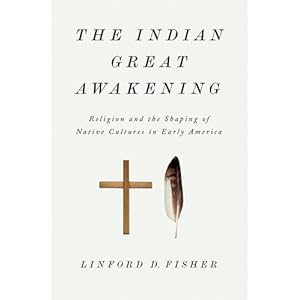
Here is the final part of our conversation with Linford Fisher, author of The Indian Great Awakening: Religion and the Shaping of Native Cultures in Early America. You can go here for the entire 4-part series in one easy reading series. Or, in separate parts: Part 1 is here, Part II here, and Part III here.
 Although engagement with present-day Native groups was
not necessarily expected or encouraged in my grad program, I increasingly
realized there are two discourses out there, two very different visions of the
past. On the one hand you have scholars from various disciplines who try to
carefully and in an “objective” way reconstruct the past. On the other hand
there is the world of Native communities, activists, and lay historians who see
academics as perpetuating certain myths about the benevolence of their white
ancestors or at least failing to tell American history in all of its sordid
fullness. Native academics often span these two worlds, but too often historians
work in the comfortable space of the archive. I wanted to make sure I had a few
additional perspectives on the past as I was writing, so I intentionally took a
few trips to Native reservations and was fortunate to be able to talk to a few
people throughout the project who really helped me to think in a more nuanced
way about the past and the issues I was trying to interpret. In the end, I
can’t say the book is groundbreaking methodologically in that regard, but the
process itself was important to me in various ways, and I think, too, the
epilogue (if people actually make it that far!) will prompt the reader to
consider the ways in which these things continue to play themselves out in the
present. I’m really grateful for the connections I was able to build and look
forward to continuing those friendships and conversations.
Although engagement with present-day Native groups was
not necessarily expected or encouraged in my grad program, I increasingly
realized there are two discourses out there, two very different visions of the
past. On the one hand you have scholars from various disciplines who try to
carefully and in an “objective” way reconstruct the past. On the other hand
there is the world of Native communities, activists, and lay historians who see
academics as perpetuating certain myths about the benevolence of their white
ancestors or at least failing to tell American history in all of its sordid
fullness. Native academics often span these two worlds, but too often historians
work in the comfortable space of the archive. I wanted to make sure I had a few
additional perspectives on the past as I was writing, so I intentionally took a
few trips to Native reservations and was fortunate to be able to talk to a few
people throughout the project who really helped me to think in a more nuanced
way about the past and the issues I was trying to interpret. In the end, I
can’t say the book is groundbreaking methodologically in that regard, but the
process itself was important to me in various ways, and I think, too, the
epilogue (if people actually make it that far!) will prompt the reader to
consider the ways in which these things continue to play themselves out in the
present. I’m really grateful for the connections I was able to build and look
forward to continuing those friendships and conversations.
 That’s a great question. One of the most exciting parts of
this project was expanding the cast of eighteenth century Indians with whom
historians are familiar. Every colonial historian knows about Samson Occom, the
famed Mohegan Presbyterian minister who attended Eleazar Wheelock’s IndianSchool and served as a missionary to the Iroquois in New York. But there were
hundreds, thousands of other Indians in this area, and my hope was to shed some
light on their experiences as well. One of my questions was this: How
representative was Occom? I remain convinced that his experiences were
important but should not be used as a stand-in for all Native religious engagement.
And even Occom (who does make several important appearances in my book) is not
the obedient Indian convert, either, nor does he wholeheartedly embrace all
aspects of Euro-American Christianity. That’s why one of my favorite persons in
the book is Samuel Niles, an eighteenth century Narragansett Indian minister. Niles
joined a missionary church in Westerly/Charlestown, RI, during the Great
Awakening, but was quickly expelled from the church for exhorting the
congregation during the service and perhaps in other ways contesting the
authority of the missionary minister, Joseph Park. In response, Niles took a
bunch of Narragansetts from Park’s congregation and started his own church.
That Indian church met in a wigwam for a while before constructing their own building
(during which time they also experienced an internal division).
That’s a great question. One of the most exciting parts of
this project was expanding the cast of eighteenth century Indians with whom
historians are familiar. Every colonial historian knows about Samson Occom, the
famed Mohegan Presbyterian minister who attended Eleazar Wheelock’s IndianSchool and served as a missionary to the Iroquois in New York. But there were
hundreds, thousands of other Indians in this area, and my hope was to shed some
light on their experiences as well. One of my questions was this: How
representative was Occom? I remain convinced that his experiences were
important but should not be used as a stand-in for all Native religious engagement.
And even Occom (who does make several important appearances in my book) is not
the obedient Indian convert, either, nor does he wholeheartedly embrace all
aspects of Euro-American Christianity. That’s why one of my favorite persons in
the book is Samuel Niles, an eighteenth century Narragansett Indian minister. Niles
joined a missionary church in Westerly/Charlestown, RI, during the Great
Awakening, but was quickly expelled from the church for exhorting the
congregation during the service and perhaps in other ways contesting the
authority of the missionary minister, Joseph Park. In response, Niles took a
bunch of Narragansetts from Park’s congregation and started his own church.
That Indian church met in a wigwam for a while before constructing their own building
(during which time they also experienced an internal division).
 That’s a tough one. I came across so many petitions
from Native individuals and communities, so many letters written by Natives
themselves, and even church records that narrate stories and/or the words of
Natives—way more than I expected going into this. A meticulously penned letter
written entirely in Latin from the Tunxis schoolmaster John Mettawan in the
1730s is one such example. One that stands out, however, is a Native
publication that I briefly analyze in the final chapter. It is a collection of
hymns put together by the Narragansett Thomas Commuck in 1845, titled Indian Melodies. Commuck had been born
on the Narragansett reservation in Rhode Island in 1805, attended the Indian
school there sponsored by a missionary society, and in 1825 Commuck moved to
Brothertown, New York, to join the intentional Christian Indian community
there. In the early 1830s he moved with most of the Brothertown and Stockbridge
Indians to Wisconsin. Commuck is mostly known for his account of the Brothertown
Indians in 1855, but this hymnal is far more interesting in many ways. Indian Melodies is fascinating because
the title of the hymns are related to Native Americans – either tribal names or
the names of Native individuals, such as Pequot, Mohegan, Mohawk, Powhatan,
Massasoit, Uncas, Sioux, Seminole, Huron, and so forth. And yet the content of
the hymns themselves are unrelated to the titles—they are mostly garden variety
Christian hymns of various origins. In this way Commuck was using the hymnal to
retain and shape Native collective memory and history, since certainly many of
the individuals and even tribes had little connection to Christianity (one
hardly thinks King Philip, for example, or the Comanches, would have approved
of Commuck naming Christian hymns after them).
That’s a tough one. I came across so many petitions
from Native individuals and communities, so many letters written by Natives
themselves, and even church records that narrate stories and/or the words of
Natives—way more than I expected going into this. A meticulously penned letter
written entirely in Latin from the Tunxis schoolmaster John Mettawan in the
1730s is one such example. One that stands out, however, is a Native
publication that I briefly analyze in the final chapter. It is a collection of
hymns put together by the Narragansett Thomas Commuck in 1845, titled Indian Melodies. Commuck had been born
on the Narragansett reservation in Rhode Island in 1805, attended the Indian
school there sponsored by a missionary society, and in 1825 Commuck moved to
Brothertown, New York, to join the intentional Christian Indian community
there. In the early 1830s he moved with most of the Brothertown and Stockbridge
Indians to Wisconsin. Commuck is mostly known for his account of the Brothertown
Indians in 1855, but this hymnal is far more interesting in many ways. Indian Melodies is fascinating because
the title of the hymns are related to Native Americans – either tribal names or
the names of Native individuals, such as Pequot, Mohegan, Mohawk, Powhatan,
Massasoit, Uncas, Sioux, Seminole, Huron, and so forth. And yet the content of
the hymns themselves are unrelated to the titles—they are mostly garden variety
Christian hymns of various origins. In this way Commuck was using the hymnal to
retain and shape Native collective memory and history, since certainly many of
the individuals and even tribes had little connection to Christianity (one
hardly thinks King Philip, for example, or the Comanches, would have approved
of Commuck naming Christian hymns after them).
Here is the final part of our conversation with Linford Fisher, author of The Indian Great Awakening: Religion and the Shaping of Native Cultures in Early America. You can go here for the entire 4-part series in one easy reading series. Or, in separate parts: Part 1 is here, Part II here, and Part III here.
7. In the epilogue you talk about present-day Native
communities and even interview several individuals. What kinds of relationships
were you able to build in this process, and in what ways are these important to
you as a historian?
Although engagement with present-day Native groups was
not necessarily expected or encouraged in my grad program, I increasingly
realized there are two discourses out there, two very different visions of the
past. On the one hand you have scholars from various disciplines who try to
carefully and in an “objective” way reconstruct the past. On the other hand
there is the world of Native communities, activists, and lay historians who see
academics as perpetuating certain myths about the benevolence of their white
ancestors or at least failing to tell American history in all of its sordid
fullness. Native academics often span these two worlds, but too often historians
work in the comfortable space of the archive. I wanted to make sure I had a few
additional perspectives on the past as I was writing, so I intentionally took a
few trips to Native reservations and was fortunate to be able to talk to a few
people throughout the project who really helped me to think in a more nuanced
way about the past and the issues I was trying to interpret. In the end, I
can’t say the book is groundbreaking methodologically in that regard, but the
process itself was important to me in various ways, and I think, too, the
epilogue (if people actually make it that far!) will prompt the reader to
consider the ways in which these things continue to play themselves out in the
present. I’m really grateful for the connections I was able to build and look
forward to continuing those friendships and conversations.
8. Who is your favorite/most interesting character in the
book, and why is that person so interesting to you?
That’s a great question. One of the most exciting parts of
this project was expanding the cast of eighteenth century Indians with whom
historians are familiar. Every colonial historian knows about Samson Occom, the
famed Mohegan Presbyterian minister who attended Eleazar Wheelock’s IndianSchool and served as a missionary to the Iroquois in New York. But there were
hundreds, thousands of other Indians in this area, and my hope was to shed some
light on their experiences as well. One of my questions was this: How
representative was Occom? I remain convinced that his experiences were
important but should not be used as a stand-in for all Native religious engagement.
And even Occom (who does make several important appearances in my book) is not
the obedient Indian convert, either, nor does he wholeheartedly embrace all
aspects of Euro-American Christianity. That’s why one of my favorite persons in
the book is Samuel Niles, an eighteenth century Narragansett Indian minister. Niles
joined a missionary church in Westerly/Charlestown, RI, during the Great
Awakening, but was quickly expelled from the church for exhorting the
congregation during the service and perhaps in other ways contesting the
authority of the missionary minister, Joseph Park. In response, Niles took a
bunch of Narragansetts from Park’s congregation and started his own church.
That Indian church met in a wigwam for a while before constructing their own building
(during which time they also experienced an internal division).
But Niles is interesting because he was an ardent Christian
Indian separatist and continually defended “his mode” of worship and preaching
when challenged by white ministers and missionaries. And yet Niles was
illiterate and couldn’t read the Bible. Instead, he received his inspiration
from the Spirit directly, through visions and dreams. Niles is also complicated
because he represents the majority faction on Narragansett lands who were at
odds with a series of sachems who were selling the land from underneath the
Narragansetts in order to pay their own person debts. But this tradition of an illiterate
minister at the Narragansett Indian church continued on into the early
nineteenth century, even after Niles passed away. When yet another white missionary
showed up in 1809, the Narragansetts still don’t have a literate minister, they
still defend their own 5-hour worship services (that involved a lot of
individuals exhorting), and they still generally don’t want the involvement of
white outsiders.
9. Same question, only your favorite/most interesting
document in the book.
One song stands out in particular, however. Titled
“Old Indian Hymn,” it is the only hymn for which Commuck included an
explanation. The Narragansetts apparently heard this tune in the air prior to
the coming of Europeans and used to sing it in their own powwows and meetings.
When the Pilgrims arrived in 1620, the Narragansetts were shocked to hear the
Pilgrims singing this same tune in their own church meetings. According to
Commuck, the tune had been preserved in the Narragansett community through the
centuries, and Commuck wanted to ensure it would not be lost.
Anyway, among the reasons for which I find this hymnal
fascinating is that it illustrates for me the way in which Natives put their
education and Christianity to all different kinds of purposes that might have
been slightly at odds with white Christians and missionaries (and even other
Natives).
10. I'll ask you a question that I always ask students about
books we discuss: two years from now, when everything else you read here has
been forgotten, what is the one thing that you most want readers to take away
and remember from your book? What is the "takeaway point" you want to
stick with them?
“Conversions” are complicated. Religious change is
always embedded in larger political, social, and cultural contexts and
considerations. Native American religious engagement was incredibly varied, and
was almost always done in ways familiar to Native cultural sensibilities,
pursued with Native communities in mind, and—even when Christian practices were
adopted—were lived out in ways that resonated with Native lifeways.
11. What are your next projects? What can we look forward to
reading from you in the future?
I’m currently working on a book-length project on
northern slavery during the colonial period. I’m most interested in the
varieties of unfree labor among Indians and Africans in colonial New England,
all with an eye toward the Atlantic world. Right now I’m working on an essay on
New England Indians who were enslaved and shipped around the Atlantic world
(which has meant dutiful research trips to Bermuda, Barbados, and London)
during and after seventeenth century wars. I’m also toying around with a
co-authored essay on the origins of evangelicalism, but it’s too early to say
what will actually come of that.


Comments
Phil Sinitiere